Bras

Today, with great reluctance, I choose to go there, to talk about bras. This is not an easy thing, as the Third Wave feminist who is wary of being identified as a “bra burner” brings up the thing that no one wants to talk about all my life. As a recent piece in The New Yorker explored, we were all just assumed that we would wear bras when we reached a certain age as part of our social contract: You go out in public? You wear a bra! My 11-year-old daughter tells me that she is the only one in her class who does not wear some kind of breast restraint device on a daily basis. If I were not on self-imposed feminist restriction from commenting on her physique, I would tell you that they are all, to my eyes, in the strictly bra-optional phase of development. If that even is a phase.

This is the thing that no one wants to talk about until this year. For some reason, bralessness has become a fashionista trend, with Rihanna, Kendall Jenner, and countless off-duty models and fast fashion houses championing this look (I’m looking at you, The Sartorialist and Everlane).

There is even a small and contested field of science that debates the relative merits of bra vs no-bra. And here is at least one thing worth considering. I remember back in the day when I was breastfeeding and commenting on the unwieldiness of the whole operation, my brother-in-law, the biologist/reproductive endocrinologist, commented that humans are the only mammals who have enlarged breasts even when they are NOT breastfeeding. Why would this be? It must be because the enlarged breast is considered an attaction to the male partner, and so the breasts get larger at puberty and stay that way though all of adulthood, an invitation to cancer. In other words, I came to wonder decades later, Is the male gaze killing me?

My history: to the outward eye, my breasts are fine, maybe ideal. I’ve always worn about a 32D, making my breasts substantial for a smallish-medium frame. But this is actually the Breast Cancer Danger Zone. Breasts like mine contain relatively little fat and are dense with breast tissue, meaning that on a mammogram everything lights up, yielding little useful data for the technologist and radiologist looking for signs of abnormality. On my recent Race for the Cure walk I enjoyed comparing notes with an older, larger woman who bragged that her radiologist just loves her mammograms because the fat deposits help divide everything so neatly. “It may be true, but I wanted to punch him!”

[Edited to add: The New York Times and others might tell you you can lower your cancer risk by reducing alcohol and smoking and increasing exercise, but who is there to tell you that high-density breasts are in themselves a cancer risk? Or that being a woman or man with breast tissue is a cancer risk? You are. Tell your friends.]

All my life I have searched for the bra that allowed me to move about as freely as possible in the world, to do my job and live my life in comfort. I have gone to the stores with the fitters that women whisper about, I have bought the expensive brands, I have been measured and re-measured. In addition to wanting breasts that “behave” by displaying the appropriate shape, size, bounce, placement, malleability, I have the additional challenge of ever-changing eczema and dermatitis that results in rough pink and brown patches on my breasts, under the bra band and under the straps. Some of these red, rough patches were ignored by me and later actually revealed themselves to be evidence of lymphatic breast cancer that looked atypical and were dismissed by even my wonderful breast surgeon. So you see, bras and breasts are not neutral things, they have implications for my health and survival, and possibly for yours and for all our daughters’.

On my most recent visit to the surgeon, she took a good hard look at all of the patchy, irritated skin on and around my breasts and she could not figure out what to biopsy. It all looked potentially normal and potentially cancerous at the same time. This is what even the best bra will do to you. I went over all the skin with her and tried to pick out some suspicious spots to biopsy. [spoiler: all came back as ‘normal’ eczema] I’ve read the articles, I’ve done the fittings, I’ve spent the ungodly amounts of money on getting the right bras from the right purveyors. It is time to ask the question, who are we moulding our bodies to please? And at what cost?


Some strategies for getting labelled “Impulsive” by Clinical Neuroscience Inpatient Nurses

  • Meekly submit to wearing yellow bracelet that says, “Call Don’t Fall” and agree to ask for assistance to mobilize out of bed and go to the toilet. Then, on the 3 occasions in the night when no one responds to multiple calls for help, shuffle to toilet alone, dragging drain poll along.
  • Get scolded for landing improperly on drain lines when returning to bed from toilet. Incidentally, the lines are not secured in the way that the neurosurgeon has requested.
  • Refuse to wear hospital gown or other coverings in overheated “semi-private” room
  • Refuse to wear disposable briefs that exacerbate dermatitis/eczema, thus requiring nursing staff to see your rashy bum when checking the soundness of lumbar drains
  • Repeatedly request cold packs to be placed between rashy sweaty body and hot plastic mattress
  • Ask nurse on last night, “When am I due for pain medications?” You want to believe the nurse, who replies with the guileless smile of Sutton Foster, “Honey, if you only rate your pain at a ‘2,’ I’m just going to give you Tylenol.”/Me: “I just want to make sure that we don’t fall behind in pain meds.” A much more dour Sutton Foster shows up an hour later with a syringe full of subcutaneous Dilautid and unceremoniously empties it into my bicep. Aaaaah.

Know that whatever you do, your polite Canadian husband will have to answer for your behaviour when he arrives in the morning. “What’s that, my wife’s refusing to wear clothes? Well, I’m not sure that qualifies as cognitive decline…”

You Should Be So Lucky

If it needs saying ever, it is worth saying now: I am lucky to be sick in Canada, and specifically in Ontario. An activist friend (hat tip, Renee Lansley) posted this article, describing two sisters’ experiences of breast cancer in Toronto and California.  Rob tells me that there is also this video from the same case. It describes better than I could the positive side of illness in Ontario, where serious universal medicine is the responsibility of the collective.  While much has been written comparing the different systems, this article is particularly relevant for breast cancer patients.

Even before I was deemed “sick,” I was grateful to know that everyone, from my neighbours to the people who pour my coffee, has access to the same system of healthcare that I do. When illness strikes, my husband (always by my side) and I calmly get into our car and drive a few minutes to our excellent, local teaching hospital, where we can be assured of getting the standard of care for every problem identified.  We pay for parking and that’s about it, and by now we’ve learned where to get the best deals on parking.

The article mentioned above draws attention to the thick stack of bills that the U.S.-based sister confronts as she navigates her cancer, a stack that I don’t have to worry about. The author estimates that the same treatment for the same disease costs Ontario about 10% of the cost of California- based sister, likely because of the efficiencies built into our single-payer system with one point of cost-negotiation and nearly zero private administrative costs. But the most important thing, to the author and to me, is that it allows the sick person to just be sick and not to simultaneously sink days into the process of paying bills and making phone calls.

Of course, it would be naive to suggest that our system is perfect. Having spent enough time with physicians and health care professionals to know how dedicated they are, I do my best to act as the “good patient.” I put my education, social capital, and research skills to use asking the “right questions” and doing my research, even when the questions are annoying and repetitive.  Sometimes they come in handy later.  I carefully track which medications I take when, and I report back to the right doctor at the right time on side effects. Doctors look at me and think, “She’s a good patient, this operation/procedure won’t be wasted on her.” Perhaps my treatment might not be so good if I weren’t so well-educated and affluent.

I’ve also learned a thing or two so far, and am bound to know more in the future. Being a good patient does not mean minimizing pain. Recently I had the experience of a few procedures in which I was only too happy to let the doctors know just how they made me feel. Ultimately, I think this was a good thing for all of us. So what if I’m being a big baby, it turns out that the more you get stuck, the more it hurts. The stitches that you get in the hours after a lumbar puncture might be truly nauseating, and it’s fair to say so at the time.

Talk about lucky – turns out that I had brain tumours in the right place – the cerebellum, which is where they are operable. Along with so many other things, I did not know that there were “good” places to have brain tumors. Also, I did not know that my little Canadian city has a well-respected and well-established centre for neurosurgery, which also happens to a great place to need to neurosurgery and follow-up care. That’s lucky.

The day after I came out of surgery, I found out that Gordon Downie succumbed to his brain cancer, a case that was closely followed by all the Canadians I know, intensifying the significance of my experience. Rob quietly watched the documentary of his farewell tour in the week following my surgery. In roughly the same time frame, MBC activist Beth Caldwell also succumbed to her cancer, another example of a brave woman showing a way that life can go with this stupid disease.

So the moral of the story is, health care is not to be taken for granted. There is a real benefit that comes from covering everyone, from taking health care out of the hands of the private system and into the realm of the public. To say to every human being, “We will take care of you,  no matter who you are, even if you have a pre-existing condition,” is to say that you value every human being in your community, without any qualification that you or someone else might dream up. And this approach provides good quality, uninterrupted care that may ultimately result in better survival for those with chronic conditions. This is a matter of real political import.  I urge my American friends to put their political weight behind it, and I urge my Canadian friends to stop and think about what this really means to us.

This is not to say, either, that the U.S.-based system has treated me badly. When I was a teacher in Massachusetts, I had access to the best health care anywhere. And now that I’m in the market for a second opinion, I may once again find myself Boston-bound to take advantage of the best and most cutting edge clinical knowledge available. When I do, I will once again find myself between two systems, figuring out how best to be the successful patient in each one.  It is helpful to know what you are dealing with.

Stuff

Few people I know would doubt that we have too much stuff. Over the course of my lifetime, the cost of ordinary goods like food, clothing, and home supplies has decreased, as adjusted for inflation, so that very few necessities are out of reach for the typical family. We end up with so much stuff chaotically crammed into our closets, pantries, desks, kitchen cupboards, etc, that sometimes it’s easier to just buy something new than to try to hunt down the old thing and figure out if it’s appropriate. Added to that, if it’s a piece of children’s clothing that you are looking for, there is a good chance that it will be outgrown before you find it.

I realized the magnitude of this problem over the summer when we had to move out of our kitchen in order to allow a contractor to renovate. Moving food out of the old refrigerator into the new, smaller storage fridge that we had put the basement, how many bottles of mustard and jars of hoisin sauce did we have? How many medium-sized jars got lost, crowded Condiment Purgatory in the back of the fridge? It turned out I had 3 jars of hoisin sauce and 4 of mustard, most likely because there is only one recipe that I like to make with hoisin sauce, so if I decided to make it on a whim, I didn’t remember what ingredients we had at home and found it more expedient to buy hoisin sauce on the spot in the grocery store.  There was a similar process for the many pounds of beans that turned up in the Great Kitchen Pack-Up.

The problem is many times worse at my parents’ house. I seem to remember an occasion when my brother-in-law went searching for mustard in their fridge and found 8 jars, all of which had expired. Some the mustards had expired before my parents even moved into their house, suggesting that they had moved expired mustard from the kitchen of their old home to the new. Hmmm. [If you’re curious, skip to the bottom to see how this turned into a conversation about racial identity.]

As the summer kitchen renovation approached, I decided that this is a real problem worth facing and strategizing around. For one thing, I had 3 pounds of red lentils to eat up, and I don’t even like red lentils. For another, I read that North Americans throw away almost half the food that they buy, and that if you ate all of the food that you bought you could possibly reduce global warming. I thought about my dear and creative friend Kathryn, who took on a New Years’ resolution to see how many dinners she could make in a row without shopping for ingredients. She had to be thoughtful about what she had and sometimes make substitutions, but the answer was that she was able to make many dinners without buying any new ingredients. Her experience, along with my week of eating detested red lentils, led me to wonder where we got our sense of the need to accumulate stuff in our kitchens. Why, for example, will I impulse buy some random item in the farmer’s market, thinking, “Oh, I saw a nice maitake and kabocha curry recipe the other day, maybe I’ll make that…”  Spontaneity can be exciting, or it can lead to an overabundance of Japanese produce in your food storage space. Also, I come from a long line of frugal self-deniers who would prefer to spend less money rather than more. I’m the girl who can keep squeezing toothpaste out of the same spent tube for a week or more after my husband has declared it better to just throw it out and get a new tube.

Moving out of our kitchen I discovered drawers full of partially-used flour, pasta, rice, beans, dried fruit, nuts…all things I love and need but was not using.  Our culture makes it so easy to accumulate and acquire new things and harder to use and enjoy what we have. To use up your beans you need to find the recipe that you like and the time to make them. And our lives are not set up to be generous with time, at least not mine. When I stop and think about it, this accumulation of stuff is a symptom of the striving lifestyle of late capitalism.  We strive to be successful parents, professionals, partners, friends, human beings, etc. So my kids eat homemade meals, The Historian and I read academic journals in our spare time, and I exercise and eat kale every day; but all of that does not make for a fulfilling life. It does not even keep us safe from cancer, does it?

The decision to do a modest renovation of our little galley kitchen was a commitment to having a space where we could enjoy spending time preparing the food that we eat.  After a few months of chaos, we have an awesome kitchen. Having packed everything up, we have attempted to unpack only what we need are are working on culling the rest. I discovered duplicate spices and gave them to people who said they could use them. We donated some usable food to the local Food Bank. We ate stuff up. For the sake of streamlined design, we got a slightly smaller fridge for the new kitchen and now anything that gets used less than once a week is stored in the basement extra fridge. I’m making a big effort to only buy what we need, and so now we can actually see the back of the fridge, cabinets, etc.

win_20171105_10_47_36_pro.jpg

This is not just about our kitchen, and it’s not just about stuff. It’s about the way that we understand what it means to live our values. I’ve had some time to dip my toe into the literature about mindfulness and minimalist lifestyles, starting with this great post.  It turns out that I can’t let The Market decide what is important to me, these  are decisions only I can make.

  • I love to spend time in the kitchen, experiment with recipes, see ingredients transform into something new.  I love to cook for myself and also for family and friends.
  • Nothing beats spending time with the people I love. A relaxed dinner of a bowl of soup and a salad together can be as nice as an elaborate meal that I spend all day on.
  • There is no winning at life if you don’t know what you value.

Okay, off now to tackle that maitake that’s sitting on my new counter.

***

Digression: Because everything is connected, this led to the following discussion around our little nuclear dinner table.

Me: You can put any of these condiments on your sausage and potatoes.

Kids (a.k.a. Neige and The Prophet) lay claim to hot sauce, mustard, relish, or whatever catches their fancy.

Me: You know, when I was growing up, we never put condiments on the table. We had a refrigerator full of mustard that we never used. Is that because it was the ’80s, or because I’m descended from hoarders? Or is it an ethnic thing?

Husband/The Historian: We always had condiments. But that’s because we’re WASPS. British food doesn’t traditionally have any flavor on its own, so we need condiments.

Me: Do you guys know that you’re White, or WASP?

N: I never thought of that before, I know that I’m Jewish, but most people don’t know that I’m 1/4 Japanese and they’re surprised to hear it.

H: Yup, you’re Anglo Saxon and Scottish, too, whether you want to be or not. That’s the thing about privilege. It’s not something you get to have or not. Also, when people assume that you are White, then you get treated as White, whether you want that or not….

It seems that my little Canadian-American-Jewish-Japanese-WASP progeny were blissfully unaware that these are labels that get stuck on them whether they want them or not. It’s not enough to think that you are leading by example, you have to have the actual discussions.


Pinktober

When I was newly diagnosed with breast cancer, many people who have been through this wringer said to me, “Welcome to the club that you never wanted to join.” And in doing so, they may as well have said, “We’re here for you; we see you; we understand your pain and fear and anxiety.” But the truth is that there is another club within the breast cancer club that people don’t like to talk about or even acknowledge, and that is the club that I am in, the club for those diagnosed with Metastatic Breast Cancer (MBC), or Stage IV Breast Cancer. MBC refers to breast cancer that has spread beyond the breast and lymph nodes, it is the only form of breast cancer that is life-threatening, and it is incurable. It bears repeating: Metastatic Breast Cancer is the only form of breast cancer that is life-threatening. A docile tumor can stay in the breast for your entire life and not cause you trouble, but the aggressive, cagey tumors that spread to bones, lung, liver, or brain are the ones that kill.

It came out of the blue; I didn’t even know that you could be diagnosed with Stage IV cancer with no prior history of breast cancer.  What’s more, I had no family history with the disease, and generally had no lifestyle or risk factors to mark me as someone who should be on guard against breast cancer. The diagnosis came as a surreal joke, but the truth is that the majority of those diagnosed with breast cancer have no known risk factors. So when the Breast Cancer Awareness Month campaigns rolled around last October, with its ubiquitous advertisements and pink ribbons, I was feeling raw and shell-shocked in the way that you do for the first 1 or 60 months after diagnosis.

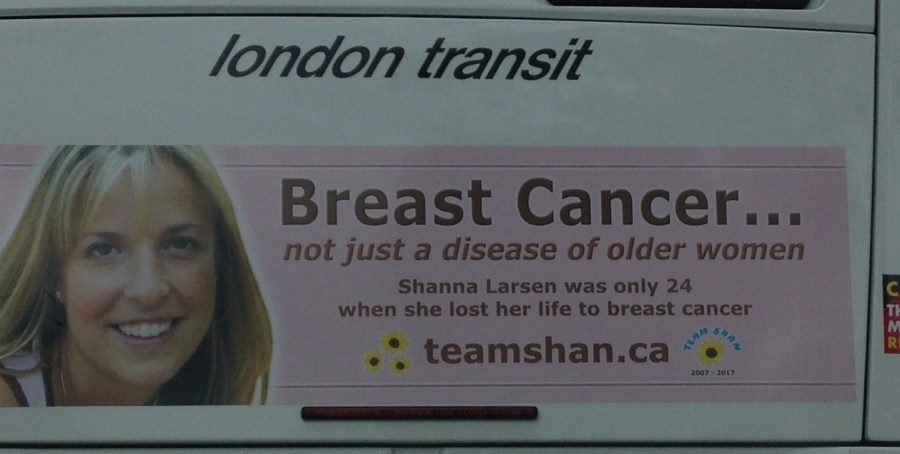
That’s when I encountered the bus. I traveled the same route as the bus when I picked my kids up from school each day. Most days in October I trailed behind the bus staring up at its large, pink advertisement plastered across the back that went something like, “Even young women can get breast cancer. Check your breasts regularly. Early detection = cure.” Screw you, bus.

I had checked my breasts regularly, had even found the lumps that would be diagnosed malignant, and had found them early enough that in an initial consultation, a surgeon told me that my chances of surviving were very good. That was before the CT scan that found suspicious lesions in my liver, lesions that would prove to be malignant, that would signal that my cancer was no longer considered curable. I realized with a sense of shame that I would never be a “survivor” in the sense that I would go through the breast cancer experience and come out on the other side.

For the 6-10% of women whose breast cancer is metastatic at initial diagnosis, there is no hope of getting through the experience, just of persisting within it. It doesn’t matter if you find it “early,” as some breast cancers are so aggressive that they metastasize before they are detectable.  Some would claim that you can be a “survivor” while living with breast cancer, but that seems disingenuous to me, as our doctors tell us that we will never have a life after cancer. Women who have been diagnosed and treated for breast cancer also face a risk of developing MBC. In total, about 30% of breast cancer patients will develop MBC.

Given that MBC is the most dangerous form of breast cancer, you would think that there would be a lot of research on it, wouldn’t you? You would be wrong. According the Metastatic Breast Cancer Network, only 7% of breast cancer funding has gone to studying MBC. The Global Status of Advanced/Metastatic Breast Cancer’s 2016 report found that, similarly, over the past decade only 7% of scientific papers on breast cancer related specifically to MBC.  Furthermore, while survival rates for early stage breast cancer have made some gains in the past decade, survival rates for MBC patients have remained about the same. The upshot is that while breast cancer itself has a fairly high profile–judging by the number of pink ribbons I see, as well as the number of fund-raising emails I get every October—MBC is both under-funded and under-studied.

How has this happened? For years we embraced the idea that increased screening, vigilance, and early treatment of all types of cancers would result in better survival for the population overall. As a result, doctors found and treated more cancers, including cancers that did not need to be treated. More recently, it is becoming apparent that we need to understand why and how cancer metastasizes if we are to develop effective treatments for all patients.

And there’s a darker side to this problem. We need to ask the question, is it possible that early stage breast cancer gets more research funding because it affects a larger population, thus offering a larger market for new drugs? Or is it simply a more effective marketing tool, to tell potential donors that by giving money to efforts to detect and treat breast cancer early, they can save lives? The book Pink Ribbons, Inc. by Samantha King argues that breast cancer fundraising campaigns have been predicated on providing an upbeat message promising survival for those who comply with breast cancer screening. This strategy has instituted a “tyranny of cheerfulness” over breast cancer patients, especially during the annual Pinktober awareness campaigns. There was little room in this narrative to talk about MBC.

The “early detection = cure” message is a cruel joke to members of the MBC community. How many nights did I lie awake wondering, if I had just found the suspicious lumps 3 or 4 months earlier, might I, then, be a “survivor”? That pink bus seemed to be suggesting that if I had just fulfilled my personal responsibilities…. Last October, one blogger, a woman who is at high risk of breast cancer due to carrying the BRCA1 gene, had the audacity to write, “My doctor told me that women who follow the rules don’t die from breast cancer.” Such statements put the blame squarely on patients for the spread of their cancer. To which I say, screw you and the bus that you rode in on.

It’s not fair to blame patients for their illness, especially when what is needed is more research and more focus on MBC. If you are receiving fundraising messages for Breast Cancer Awareness month, please ask yourself the questions: Is this fundraiser going to benefit all breast cancer patients or just those in the early stages of the disease? Is the message focused on early detection and treatment, or is it focused on responding to the needs of all, including the most imperiled? If you would like to donate to support breast cancer research, please consider giving to an organization that recognizes the need for more research and support for MBC patients.

On October 1, I took part in my local Run for the Cure event to mark Breast Cancer Awareness Month. Given my skepticism towards these efforts, I was not sure what to expect. But, as the old feminist adage goes, Sisterhood Is Powerful. Gathering with so many people of all ages marking their personal losses from breast cancer as well as their collective hope for a cure made me feel supported. Indeed, flawed as this movement may be, it has gone a long way towards making breast cancer a popular cause. There was a time when people would not even say the word “cancer,” and now I can be celebrated for living with it. (“You’re amazing!” one young volunteer enthused when I went to pick up my free pink t-shirt.) More importantly, as I walked the course with friends who have been through the breast cancer experience, it opened up a space for us to have conversations that would otherwise feel out of place. We talked about facing fear, the places where we find strength, and dealing with the limits of scientific knowledge.

This year that bus is back with a large pink ad, proclaiming, “Breast Cancer . . . not just a disease of older women,” next to a photograph of a vibrant young women, telling us she “was only 24 when she lost her life to breast cancer.” This acknowledgement that women die from breast cancer suggests that the message is moving in the right direction. Over the past year, I have learned that there is no shame in having MBC, and by telling my story I can change the collective understanding of breast cancer to include those of us living with the disease, not surviving.


What is pain?

I thought that pain was the thing that hurts, but now that I’m here, recovering from brain surgery, I realize that I don’t really know what pain is. When I woke up from my surgery, I just felt swollen and stiff all over and also somewhat numb. I didn’t know what could move and what couldn’t. I was doing so well that I skipped the intensive care recovery room and went straight into neurology observation. (I think, it’s all a bit fuzzy.) In the observation room, there were 6 patients and 3 nurses. The nurses were required to make sure that we were awake every couple of hours, that we knew which end was up (literally) and to ask us to rate our pain on a scale of 0 to 10.

I didn’t know what to say. Was I in pain? My head felt like it might explode. Maybe it was supposed to feel that way after being cut open. It wasn’t pain exactly, more like an extraordinary amount of pressure, like what I felt like when I was in labor with no drugs, but that turned out okay.  There was a woman to my right complaining of pain, saying she had to see the doctor, that her pain was unbearable, and all I could think was, “I can’t go to sleep until this woman’s pain is under control.” But it never was under control that night, not after a visit from the resident on call and administration of additional pain meds. At one point I think she got tired and said, “I’m sorry, I’m just not used to throbbing like this.” I will never know what kind of pain she was in and whether it got better, but it’s not my job to know, either.

As the days wore on, I had to rate my pain less frequently, but the nurses and doctors still asked every time they saw me. And it was clear that the number that I gave them back, meaningless to me, had the power to trigger action. I also learned that pain does not necessarily feel like a hurt. Instead, I was in uncontrolled pain with my normally low blood pressure spiraling upward, my body consumed by mild shakes that I could not control, and swelling in my neck precluding normal swallowing of even small sips of water and medication. Still, on that first day after surgery, one of the nurses had said, “She’s swallowing fine, you can cancel the visit from the Speech Language Pathologist.” Luckily, my friend Sarah, the pediatrician/public-health-officer/epidemiologist/outward-face-of-syphilis, had a talk with my team to let them know that my pain situation was not under control and insisted that it be addressed before bedtime (at least before the resident’s bedtime). Reluctantly, the team switched me back to pain injections instead of the slower acting tablets that they had put me on.

But to go home I had to get off the injections. The nurses strongly encouraged me to try to stretch out the time that I spent between pain meds to wean myself as soon as possible. On day 3 after surgery the nurse told me that she wanted to make sure that my pain was below a 5. As long as I told her it was below 5, she was happy. I’m not sure what she thinks below 5 means, but to me it means that I can swallow, am not shaking, have normal blood pressure, and don’t feel the dread of encroaching stiffness in my neck.

Turns out, pain is different for every person, and some people have dedicated their lives to understanding it from different perspectives, such as those of physicians, nurses, patients, social scientists, etc.  When I was first diagnosed with breast cancer, some people joked, “Welcome to the club that you never wanted to join!” But I consider the club of people who live with chronic disease to be another important one for me, and I am grateful to them for teaching me a bit about what it means to live in a body that is at odds with itself or with society at large. One friend and disabilities activist, Layla, posted on her Facebook feed yesterday that she was required to “provide documentation of pain from a phantom limb” to the Powers That Be. We can agree that is funny, right?

Now it’s a week after surgery and I am running out of pain medication once again. I went to my family doctor today and talked through what I can expect. She is mostly reassuring, but sometimes the conversation verges on the ridiculous:

Them: Do you have a headache, or do you have pain in your head?

Me: Do you mean other than the place where you cut my head open and sewed it back together?

WIN_20171023_11_56_42_Pro

The Worst Day of Your Life

The Worst Day of Your Life might not start out that way. Maybe it is a Thursday, you get up early to get the kids ready for school and make yourself a perfect 3-minute fresh egg from the farm in town. You take the kids to the dentist, where they get the dental seal of approval, and then to school. Then you go to your favorite coffee shop and get a perfect latte. And as you are paying for your latte, your phone rings, and that’s when it takes a turn.

It’s the nurse at your oncologist’s office, they have your results from yesterday’s CT scan and would like to see you that day, as soon as possible. That’s bad news. You call your husband, who is out of town that day, and clear your schedule so that you can go, with your stoic Asian mother, to the oncologist’s office.

The radiation oncologist greets you with a grim face and reddened eyes. She tells you that the CT showed tumors in your brain, as well as swelling, and apparently the swelling is threatening, well, everything. There is a neurosurgeon waiting for you in his office, he has OR time on Monday and thinks he can fit you in. You medical oncologist tells you that he is “shocked and horrified” that the cancer has proven itself to be so devious as to figure out how to take up residence in your brain, protected by the blood-brain barrier from the drugs that seem to have beaten back cancer in the rest of your body.

Leaving your mom at home to wait for the kids to come home from school, your friend Rachel drives you to see the neurosurgeon because you need someone to go with you and also because you are now not allowed to drive. The neurosurgeon is a compassionate, competent, unaccountably humble superhero with magic hands. He patiently shows you your scans, a series of cross sections of your brain, highlighting the blobs of concern. He explains the procedure and you try to follow along, lightly grasping the sequence of cutting, removing, draining as outlined. What you do grasp: you must do something and soon. There is no time for careful consideration or second opinions or phoning a friend. You sign the consent form on the spot.

Then off you go to the MRI, the scan that will reveal in greater detail what is happening in your brain. You lie in a noisy machine knocking and rattling around you, head in a cage with padding to keep everything still for 45 minutes. This is a lot of time to absorb the shock of the past 3 hours, and you wonder whether your crying and shaking will interfere with the scan.

Next back to the neurology floor, where you are admitted to a hospital bed, and you have to send your friend home for your toothbrush because when you woke up this morning you thought the day would end at home in your own bed. And that was the worst day of your life. So far.

But if that was the worst day, then the next day might be a little better. You get a bit of sleep in hospital, you meet with the doctors you need to meet with and encounter no obstacles for surgery. The MRI shows no new bad news, and in your new reality that passes for good news.  Your husband, the light of your life, arrives and holds you close. A few close friends drop by. They cry, you cry, you all laugh. You have an amazing talk with your rabbi, and if you’re one of those skeptics who doesn’t know what the point of organized religion is, THIS IS THE POINT. Friends call from far away offering warmth and wisdom. You feel loved. You feel validated. Your life, ever more fragile, still has meaning.

And at the end of the day, your husband brings your children to visit you. They are quiet and frightened but also relieved to see that you look like yourself, and eager to snuggle up with you on the tiny hospital bed while your husband reads a chapter from Harry Potter and the Half Blood Prince. You know that you have everything that you need.

*****************

So that’s where I am at. Having finished all the pre-operative preparations on Friday, I got to go home for the weekend, and now I’m back in the hospital bed ready for surgery tomorrow. I’m in good hands – literally, this surgeon is fantastic – surrounded by supportive family and friends. This is a very unexpected turn of events, but I am facing it head on. As always, I welcome your prayers and messages of support. I may not be able to answer them, but they do shore up my strength.

Good-bye Summer

We’ve had a second summer here in southern Ontario in September. It was over 30 degrees Celsius (close to 90F) during the day for about a week now, which is actually hotter and more humid than it has been for most of the summer. This has the effect of stretching out the summer, especially since we can still get good corn at the market. And it causes me to look back on the recipes I’ve discovered this summer.

I had the chance to make a lovely summer lunch with two dear friends who are both fans of Yotem Ottolenghi’s wonderful, excessively complicated recipes. We ate outside and enjoyed cod with spicy tomato sauce, which I made a few times this summer, despite it being more involved than my usual fish dinner. We had it with basmati and wild rice with chickpeas, currants, and herbs and an Ethiopian lentil stew. The fish and rice recipes are from Ottolenghi’s Jerusalem cookbook, which has enough great recipes to make it worth buying. In truth, though, I rarely make one of his recipes without skipping a step or leaving out an ingredient. In the case of the rice, it was the fried onions. It was still delicious.

Another staple worth mentioning is Sarah Britton’s Best Lentil Salad Ever. Might as well just have this in the fridge at all times. It can be lunch, dinner, picnic, potluck, and is made from pantry staples. I like to dress mine up with fresh greens like mizuna.

Another recent discovery is Melissa Clark’s fusili with lemon, capers, and roasted cauliflower from her new cookbook Dinner: Changing the Game. It comes together fast and is a great mix of flavors. You can add chickpeas or cannellini beans to make it a little heartier. The cookbook is worth a look, too, because Clark is a brilliant recipe writer who keeps things simple and streamlined but the flavors come out interesting.

Another Melissa Clark standout is her broccoli salad recipe. Okay, I haven’t made this recipe as written, but I’ve used it as an inspiration to make a raw broccoli salad, letting the broccoli “cook” in the dressing over a couple of hours. I made it with olive oil, lemon, and garlic because I was traveling and that was what I had on hand in our beach condo and then in the little apartment that we rented in Paris for a week. It proved to be just the right thing to come home to after a long day of sightseeing when you only have the energy for a very simple supper. This will keep for a day or two because the broccoli won’t wilt like salad greens will. One of these days I will get around to making Melissa Clark’s actual recipe, which created a quiet commotion on the foodie-net when it appeared in the NYT last spring.

Looking back over these recipes, none of them are exclusively summer recipes, they’re just recipes that I happened to make over this summer. So I can — and will — keep making them into the fall. The pasta with cauliflower will be in our regular dinner rotation, and the lentil salad should find a permanent spot in the fridge. The past couple of days the weather has turned more autumnal, and now we look forward to the season of root vegetables, soups, and stews.

Revelations: Preserved lemons and mizuna

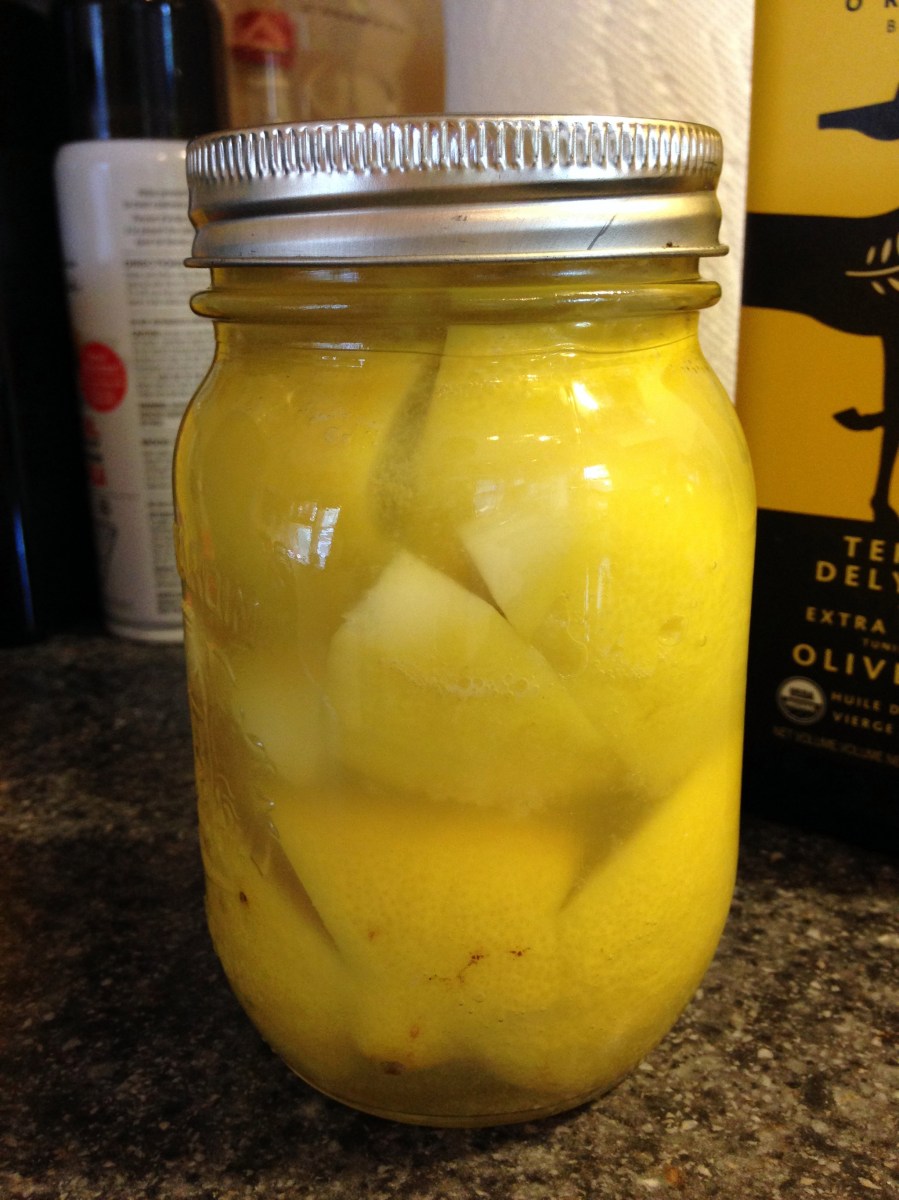
Every so often when I’m flipping through a Mediterranean cookbook (or, if it’s 1985, The Silver Palate Cookbook), I come across a recipe that uses preserved lemons.  Usually it’s accompanied by a little note that says something like: Preserving lemons is really easy.  Just quarter some lemons, rub with kosher salt, and stuff into a jar until it won’t hold any more.  Fill to the top with lemon juice, and keep in the cupboard for two weeks.  And that’s when I stop reading and think: I don’t want to make this recipe in two weeks, I want to make it now.

Well, I’m super chuffed to announce that my decades of not making preserved lemons are behind me, with assistance from my 8-year-old sous chef (nom de blog The Prophet) and this video from Food 52.  It really is as easy as they say.  I recommend using certified organic lemons because after two weeks you open your jar and chop up the lemons to use, pulp, pith, peel, and all, in a whole variety of dishes.

Always on the lookout for easy, tasty, healthy meals, I can’t get enough of lentils with preserved lemon and brown rice.  Mix up some of your favorite lentils (du Puy, if you ask me) and brown rice with a nice extra virgin olive oil, and nutritional yeast (for vegans) or parmesean.  Finely chop some of those preserved lemons and add them with perhaps some of the brine.  The bits of preserved lemons dot the lentils and rice like little juicy, sour, salty exclamation points.  I like to mix it up with one of my other recent discoveries — mizuna!

DSC_0009

It has recently come to my attention that the earnest tillers of the earth at my local farmer’s market have been cultivating myriad leafy green wonders.  Mizuna, according to Wikipedia, is also known as Japanese mustard greens.  I took a chance on this unfamiliar green because I have already eaten my weight in kale and spinach 1000 time over.  Mizuna’s sweet little leaves are delicate in texture with a slight bitter bite reminiscent of arugula but milder.  I stirred them right into the lentils and rice to add color and depth of flavor to the dish:

DSC_0023

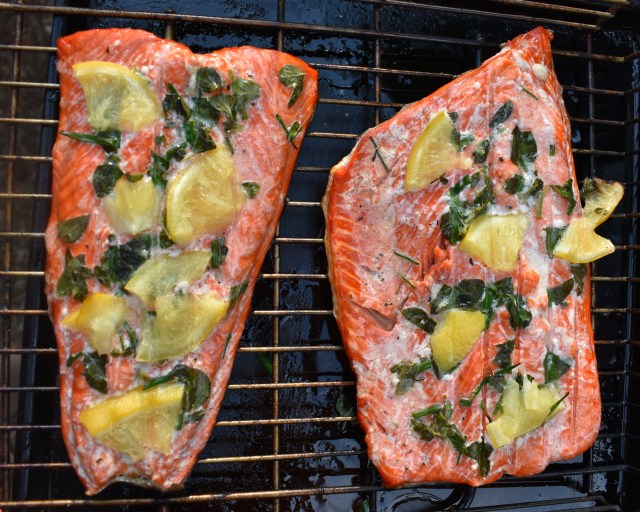
In June, we took a trip to Chicago, where we ate at Il Pesce, one of the restaurants in Mario Battali’s Eataly, a.k.a. Foodie Heaven.  There, The Prophet and I shared a whole red snapper that was grilled with fresh herbs and slices of preserved lemon stuffed inside.  Turns out that the dish is easy to recreate at home.  Add fresh herbs – oregano, chives, cilantro, and parsley work well – to olive oil, brush on fish such as trout or salmon, and scatter sliced preserved lemon on top.  You can grill it or slow roast in the oven, and when you’re done, you may think you’ve been transported to a major Chicago food destination.

DSC_0139


Lesson 2: Make friends with your cancer

Ahem.  Picture, if you will, Bill Murray as Nick the Lounge Singer singing the following:

Happy Cancerversary to me,
Happy Cancerversary to me-eeeeeeeeeee,
Happy Cancerversary tooooooooooooooooooooo me!!!!

It has been one year since I lay in bed at 2 am unable to sleep (perimenopause, am I right?) and thought, “Hmmm, I haven’t done a self-breast exam in a while.”  That was followed by, “Huh, I don’t think that’s supposed to feel like that,” and — one year ago today — a trip to the family doctor and a biopsy the next day, and the big reveal that this is was not the benign lump scare that so many of my friends have had, it was the real deal.

One strange thing about breast cancer, unlike some cancers, is that you can have no symptoms, can feel absolutely fine, when the doctors tell you that your life is in peril.  So how do you make sense of this unseen, unknowable threat? In Memoir of a Debulked Woman, Susan Gubar describes the legion of metaphors for what lurks within the body:

Despite Susan Sontag’s admonition against illness metaphors, images insist on creeping back. “Ovarian cancer is like a cockroach, defying an arsenal of poisons,” the fashion editor Liz Tiberus declared about her sense of infestation.  Systemic, cancer can morph from a cockroach to an astrological crustacean to an insane avenger…. Christina Middlebrook explains that the shifty and mobile crab-cancer “never takes the direct path, preferring to move sideways and furtively….

The heroine in Gail Godwin’s novel The Good Husband pictures her ovarian cancer as a “gargoyle” munching on her internal organs.  To Katherine Russell Rich, cancer becomes “a panther, voracious but willing to bide its time,” but also “a cellular part of you turned wild, ungovernable….” A cankerworm, eel, embryo, or cockroach; a wilding twin, bully, emperor, beast, assassin, or demon, cancer strengthens itself at the expense of the weakened and unsuspecting human being whom it attacks and within whom it lodges to gain strength.

Eesh, is it any wonder that I found solace binge watching Stranger Things?

One of the first things that you hear when you tell people that you have cancer is to “fight hard”; war is probably the most common metaphor for the cancer experience.  And, sure, if you’re a doctor it makes sense, as you’re going to use “everything in your arsenal” to “defeat the enemy.”  But what if you’re not a warrior by nature, and what if you don’t want your body to be a battleground?  What if critiquing militaristic narratives is kind of your thing? What if someone tells you to fight, and your  first instinct is, “Can we just … not?”  I could not go to war with my body. I found it unbearable to walk around holding my enemy within my body, right next to my heart.

In a few places, I read about people attributing a less venal attitude to their cancer.   One woman imagined her cancer as “a bumbling, confused lout who postured a lot but hung around the home.”  In Life over Cancer, Keith Block recalls a man with prostate cancer who would talk to “his little cancer” every day, offering it love and acceptance in exchange for staying small and contained.

A pathologist I know provided the image above to help me understand what was going on inside of me.  Look at the large, unruly nuclei in the rapidly dividing cells, disorganized, trying but unable to form breast ducts and other proper tissue structures.  It dawned on me that my cancer was just a collection of wayward cells trying their hardest to live and grow.  They didn’t know that they were overstepping sensible limits and threatening the very terrain in which they had taken root.  I felt towards them the way that I felt about some of my more challenging students from my days as a teacher: You’re making things hard for me,  and you’re making things hard for you, but I can see that you’re just trying to get by here and that you have no evil intent.

These metaphors matter because it’s hard to find a sense of equanimity and grace when you feel that you are under constant attack.  In Anti-Cancer: A New Way of Life, David Servan-Schreiber argues that the research that shows that feelings of persistent stress inhibits the immune system’s normal mechanisms for identifying and destroying cancer cells.  Rats who were implanted with cancer cells and made to feel helpless when subjected to random electric shocks were half as likely to fight off their cancer as rats who were empowered with a lever to reduce their electric shocks.  I’ll take that lever now, thanks.

For my cancerversary I got an awesome gift – an MRI and a CT scan showing that my cancer is stable and tiny.  With Stage IV, stable = WINNING.  What were once active tumors are now small lesions or smudges on the scans that may be dead cancer cells or inflammation, or may be small, contained tumors.  We don’t know exactly what the remaining cancer cells are doing, whether they are dying off or plotting their next move.  I like to think that they are mollified, enervated, kicking back on their little malignant couch, watching Netflix.

Once again, I give thanks for being one of “the lucky ones,” for the time being.  Have I made friends with my cancer?  A year ago I was curled up in a fetal position in a surgeon’s exam room, physically unable to face the truth of my body.  Now I sit calmly waiting to hear the results of the latest scan.  I can share good news: “My incurable cancer is barely detectable!” with only the slightest trace of irony or despair.  And I know that if bad news comes my way, I can face it with courage and strength and love, as so many others have done.  After all, illness is an essential human experience.  As Arthur Frank wrote in At the Will of the Body,

The ill have already fulfilled their responsibility by being ill.  The question is whether the rest of us can be responsible enough to see and hear what illness is, which ultimately means seeing and hearing what life is.  Being alive is a dual responsibility: to our shared frailty, on the one hand, and to all we can create, on the other.  The mutual responsibilities of the ill to express and the healthy to hear meet in the recognition that our creativity depends on our frailty.  Life without illness would not just be incomplete, it would be impossible.  

Have I made friends with my cancer?  Not entirely, but I know who the enemy is.  It’s not illness, and it’s not death.  The enemy is shame.  It is judgment.  The enemy is the voice that tells you that your fragile life lacks meaning and dignity.

Lately I’ve been reading Nina Riggs’ beautiful new memoir The Bright Hour, about her year after being diagnosed with breast cancer.  A poet and mother of two young boys, she makes the experience vivid and poignant and memorable.  Nina was not one of the lucky ones.  One night early in the year, when her husband said he couldn’t wait for things to get back to ‘normal,’ she responded with fierce determination: “I have to love these days in the same way I love any other.  There might not be a ‘normal’ from here on out…. These days are days…. We choose how to hold them.  Good night.”